What to Do After Water Damage in Las Vegas: The First 24 Hours
Finding water where it shouldn’t be is stressful, whether it’s a burst pipe in the middle of the night, a water heater that failed in the garage or a leak coming through the ceiling of an office suite. What you do in the first few hours affects how far the water spreads and how much of your property can be dried instead of removed.
This guide walks through the first 24 hours after water damage in Las Vegas: what to do right away, what to leave to professionals, and why a building that looks dry isn’t always dry.
1. Make Sure Everyone Is Safe
Before anything else, look at the situation from a safety standpoint:
- Electricity and water: Don’t walk into standing water if it may have reached outlets, power strips, cords or appliances. If you can reach your electrical panel from a completely dry location, you can switch off power to the affected area. If you can’t do that safely, stay out and call an electrician or your utility.
- Ceilings: A ceiling that is bulging, sagging or dripping heavily can hold a lot of water. Keep people out from underneath it.
- Contaminated water: Water from a sewage backup or outside flooding should be treated as contaminated. Avoid contact and keep children and pets away. See sewage cleanup.
- Slips: Wet tile, laminate and concrete floors are slippery.
2. Stop the Water If You Can Do It Safely
If water is still flowing, stopping it is the most important step you can take:
- Fixture valves: Toilets, sinks, dishwashers and washing machines usually have a shutoff valve on the supply line.
- Main water shutoff: In many Las Vegas homes it’s near the front of the house, where the water line enters, in the garage, or at the meter box near the curb.
- Water heaters: Close the cold-water supply valve at the top of the tank.
- Commercial and multi-unit buildings: The shutoff may be for a single unit, a riser or the whole building. Contact your property manager or maintenance team right away.
A plumber repairs the pipe, fitting or appliance that failed. The water damage it caused is a separate job, and that’s the part a water damage mitigation company handles.
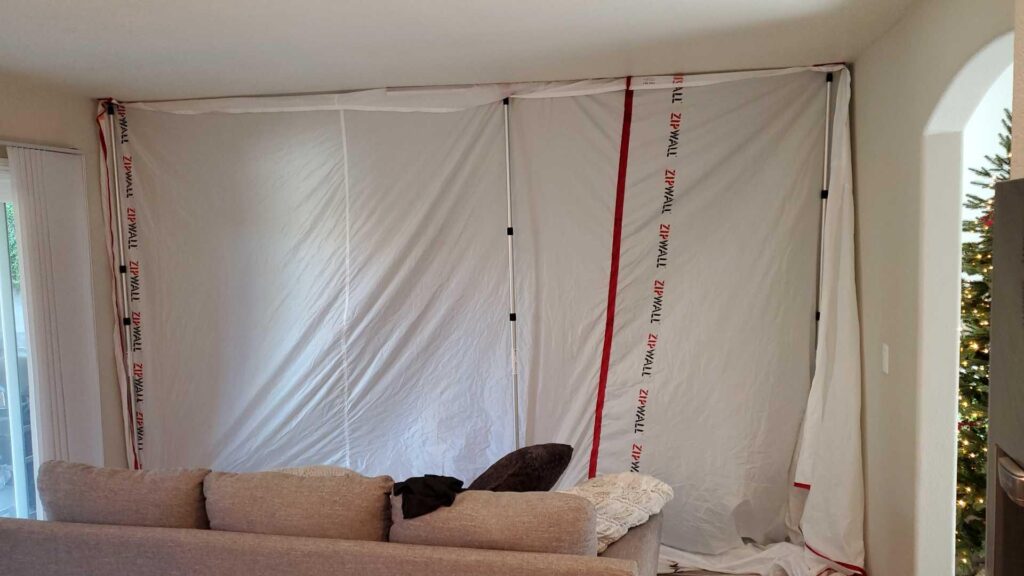
3. Document the Damage
Before you move things or start cleaning up, take photos and short videos of:
- Where the water came from, if you can see it
- Standing water and wet flooring
- Stains on walls and ceilings
- Damaged furniture, belongings and inventory
Write down when you discovered the water and what you did. Hold on to damaged items until you know whether your insurance company wants to see them. These records are useful for insurance and for the contractors you work with later.
4. Notify Your Insurance Company
If you plan to file a claim, contact your insurance company or agent to report the loss and ask about the next steps. Policies differ in how they treat sudden leaks, long-term leaks, flood water and sewer backups, so questions about coverage should go to your insurer. Many policies also expect policyholders to take reasonable steps to prevent further damage.
A mitigation company doesn’t decide coverage, but it can provide documentation of the work it performs, such as photos, moisture readings and drying records. Learn more about water damage mitigation and insurance documentation.
5. Know When Standing Water Needs Professional Extraction
A small spill on tile can be wiped up. Most real water losses need more than towels and a wet vac. Professional extraction is usually the right call when:
- Water has spread across carpet and pad or into more than one room
- Water has gone under baseboards, cabinets or flooring
- Water came through a ceiling or from an upper floor
- The source was a burst pipe, water heater or supply line that ran for a while
- The water is from a sewage backup or outside flooding
Extraction removes the bulk of the water quickly so less of it soaks into the building. See emergency water extraction.
6. Visible Water Is Only Part of the Problem
Once the standing water is gone, it’s easy to assume the job is done. In reality, water moves into places you can’t see:
- Drywall wicks water upward from the floor
- Baseboards and the bottom plate of walls hold moisture
- Carpet pad and subfloor stay wet under dry-looking carpet
- Cabinet bases and toe kicks trap water
- Ceilings and insulation hold water from leaks above
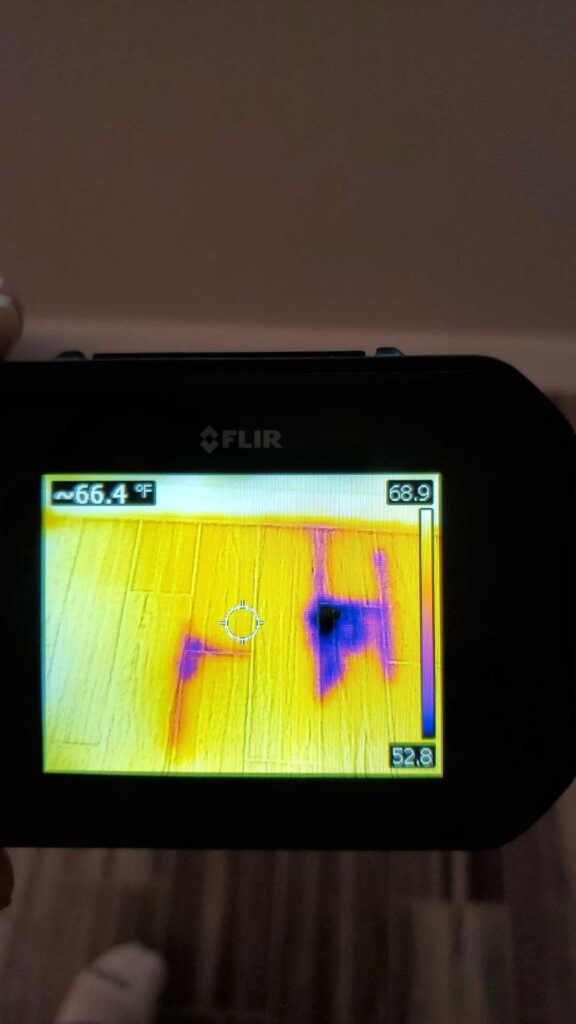
Professionals use moisture meters and inspection tools to map where the water has actually gone, so drying covers the whole affected area and not just what looks wet.
7. Why the Las Vegas Climate Won’t Dry a Building for You
Our desert air is dry, so it’s natural to expect water damage to dry out on its own. Surfaces do dry quickly here, which can be misleading. Inside a wall cavity, under flooring or behind cabinets there is very little air movement, and moisture can stay trapped long after the surface feels dry. Concrete slabs can also hold moisture under flooring.
The longer building materials stay wet, the more they can deteriorate and the greater the chance of odors and mold growth. That’s why proper drying is confirmed with moisture readings rather than by touch. More on water damage cleanup and structural drying in Las Vegas.
8. What Structural Drying and Dehumidification Involve
Structural drying removes moisture from the building materials themselves. It usually involves:
- Air movers placed to move air across wet surfaces and pull moisture out of them
- Dehumidifiers that remove that moisture from the air so it doesn’t settle back into the structure
- Moisture monitoring, with readings taken as drying progresses and equipment adjusted as needed
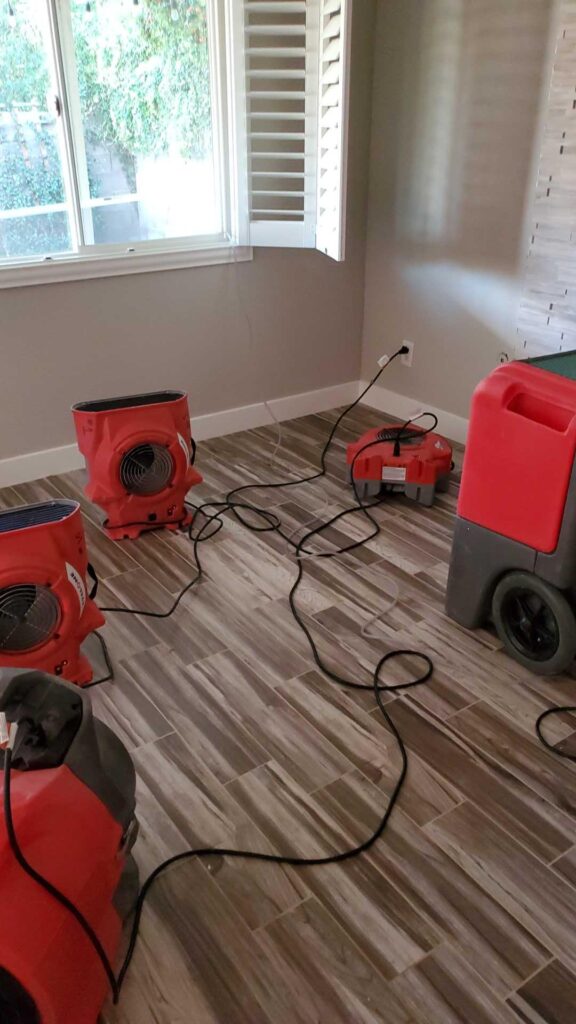
Drying is complete when readings show the affected materials are dry. How long that takes depends on the materials, how much water was involved and how long it sat. Read about our mitigation and dry-out process.
9. What Controlled Demolition Means, and When It’s Needed
Not every water loss requires removing materials. Many materials can be dried in place, especially when drying starts promptly. Controlled demolition is the careful removal of specific materials when that isn’t possible, for example:
- Drywall or insulation that is saturated or damaged
- Carpet pad soaked by water, especially contaminated water
- Baseboards or small sections of drywall removed so air can reach a wet wall cavity
- Materials affected by sewage or outside flood water
The goal is to remove only what is needed so the structure can dry properly. Rebuilding those areas is a separate step that happens after mitigation is complete.
10. What a Water Damage Mitigation Company Does
A mitigation company handles the urgent work of stopping the damage from spreading and drying the structure. That typically includes:
- Assessing the loss and finding where moisture has spread
- Extracting standing water
- Removing materials that can’t be dried in place
- Setting up drying and dehumidification equipment
- Monitoring moisture until the materials are dry
- Documenting the work with photos, readings and drying records
We focus on mitigation and dry-out and don’t perform reconstruction, so once the structure is dry you can choose any contractor for repairs.
11. Homes vs. Commercial and Multi-Unit Properties
Homeowners
Most residential losses in Las Vegas start with plumbing: slab leaks, water heater failures, supply lines, toilet overflows and AC condensate lines. In two-story homes, water from an upstairs bathroom or laundry room often shows up in the ceiling below. See residential water damage.
Businesses and Property Managers
In offices, retail spaces, apartments and condos, one leak can affect several suites or units. Stop the source, check the spaces around it (especially below), notify owners, tenants or residents as your procedures require, and keep documentation organized by unit or area. See commercial water damage.
Your First 24 Hours Checklist
- Make the area safe: electricity, ceilings and contaminated water
- Stop the water at the fixture or main shutoff
- Take photos and video before cleanup
- Move belongings out of the wet area if it’s safe
- Call a plumber if the source needs repair
- Report the loss to your insurance company if you plan to file a claim
- Call a water damage mitigation company for extraction and drying
- Keep records of everything
When to Call for Professional Mitigation
Call for professional help if water has spread beyond a small area, soaked into carpet, walls or ceilings, came from a sewage backup or outside flooding, or affects more than one unit or suite. It’s also worth a call if a leak was fixed but you’re not sure whether the building is fully dry.
Water Damage and Restoration Services, LLC provides 24/7 emergency water damage service across the Las Vegas Valley. Call (702) 354-5811 any time, day or night, or request service online.
Frequently Asked Questions
Can I dry water damage myself with fans?
Fans can dry surfaces, but they often don’t reach water trapped inside walls, under cabinets or beneath flooring, and without dehumidification the moisture stays in the building. Moisture readings are the reliable way to know materials are dry.
Will I need to replace my drywall and flooring?
Not necessarily. Many materials can be dried in place, depending on the type of water, the materials and how long they stayed wet. Materials are removed when they can’t be dried properly.
Should I call my insurance company or a mitigation company first?
You can do both. Stopping the water and starting mitigation limits further damage, and reporting the loss starts the claim. Ask your insurer about any specific requirements in your policy.