
Burst Pipe & Plumbing Leak Water Damage in Las Vegas
When a pipe bursts or a hidden leak finally shows itself, the plumbing gets fixed, but the water it released is still in your floors and walls. We handle that part: extraction, controlled demolition where needed and a proper dry-out.
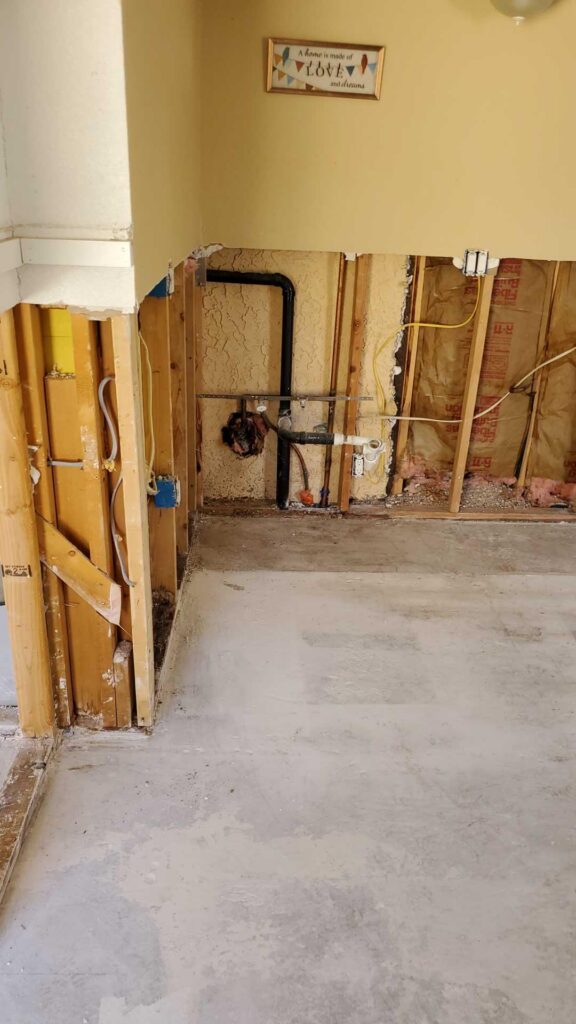
We handle the water damage, not the plumbing repair
A plumber repairs the pipe, fitting, valve or water heater. We're the team that deals with the water that escaped: getting it out of the building and drying the materials it soaked into. If the leak hasn't been repaired yet, shut off the water and call a plumber for the repair. You can call us at the same time so drying can start as soon as the source is stopped.
Types of plumbing leaks and the damage they cause
Burst pipes
A lot of water released quickly, often inside a wall or ceiling. Water can travel through wall cavities and down to lower floors before it shows.
Slab leaks
Leaks in lines under the concrete slab that wet flooring and the bottom of walls from below. Signs include warm spots on the floor, damp carpet or baseboards, the sound of running water and a higher water bill.
Water heater failures
Leaking or ruptured tanks in garages, closets and attics. Hard water can wear tanks and fittings over time.
Supply-line failures
Braided or plastic lines to toilets, sinks, ice makers, dishwashers and washers that crack or disconnect.
AC condensate leaks
Clogged condensate lines or overflowing pans, often in attics, that leak into ceilings and insulation.
Toilet & fixture overflows
Overflows that soak flooring and, in two-story homes and stacked units, come through the ceiling below.
Drying out after a pipe leak
Leak water rarely stays where it lands. It runs along the bottom plate of walls, wicks up drywall, soaks cabinet bases and spreads under flooring. Drying out after a pipe leak usually involves:
- Extracting standing water. Water extraction.
- Mapping moisture in walls, cabinets and floors around the leak
- Removing baseboards, toe kicks or lower drywall where cavities can't dry otherwise
- Structural drying and dehumidification. Structural drying.
- Monitoring moisture until materials are dry
- Documenting the work for insurance. Insurance documentation.
Sudden leaks vs. slow leaks
A burst pipe is obvious right away. A slow leak under a sink, behind a shower or under the slab can go on for weeks, and the damage it causes can be more extensive by the time it's found.
Insurance companies may treat sudden and long-term leaks differently. Only your insurer can tell you how your policy applies. We document what we find and the mitigation work we perform.
What to do after a pipe bursts
Shut off the water
Close the fixture valve or the main shutoff. For water heaters, also shut off the cold-water supply to the tank.
Stay safe
Stay out of standing water near outlets or appliances. If water is coming through a ceiling, keep clear of sagging drywall.
Call a plumber for the repair
The source needs to be repaired before the area is put back into use.
Call us for the water damage
Call (702) 354-5811, 24/7. Extraction and drying can begin once the water is stopped.
Leak water damage questions
Do you fix leaking pipes?
No. Pipe and fixture repairs are handled by a plumber. We handle the water damage the leak caused.
The leak was inside a wall. Does the wall have to come out?
Not always. Sometimes removing baseboards or making small openings lets air reach the wet cavity. When drywall or insulation is saturated or damaged, the affected section is removed so the cavity can dry.
My leak affected a condo below me. Can you help?
Yes. We can check and document the affected areas in both units. See HOA and multifamily water damage.
Related services
Pipe burst or leak? Call now.
24/7 water damage cleanup and drying across the Las Vegas Valley.