Water Damage Mitigation & Dry-Out Process in Las Vegas
Mitigation is the urgent work that stops water damage from spreading: getting the water out, finding where moisture has traveled, removing what can't be saved and drying the structure. It's the only part of the job we do, and we focus on doing it well.
Available 24/7 for homes and businesses across the Las Vegas Valley.
Mitigation vs. reconstruction
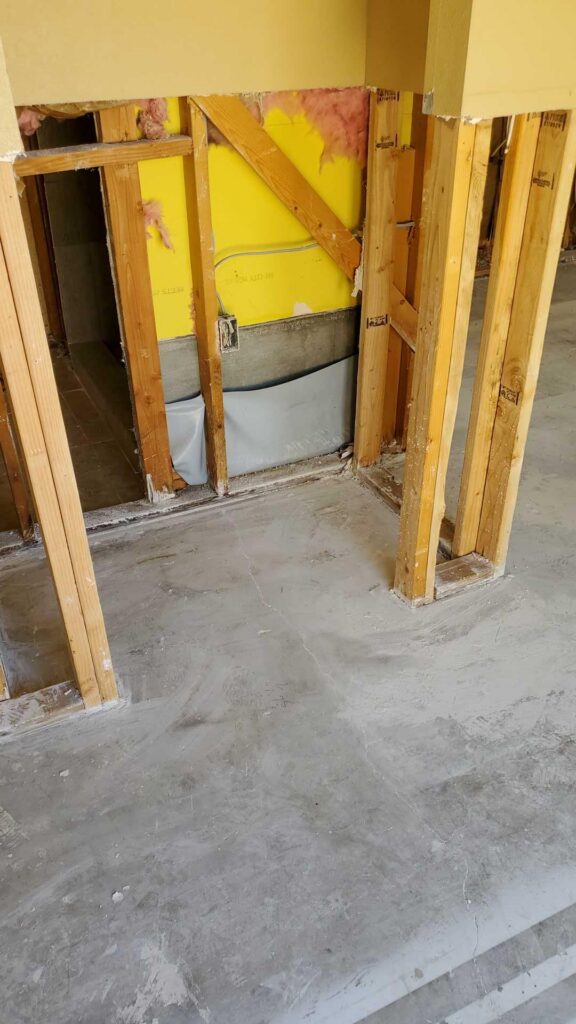
After a water loss there are usually two separate jobs. Mitigation is the emergency phase: extraction, removal of unsalvageable wet materials, structural drying and moisture monitoring. Reconstruction comes afterward and puts the property back together with new drywall, flooring, paint and trim.
We focus on mitigation and dry-out, not reconstruction. Our job is getting the water out and the structure dry. When drying is complete, you, your property manager or your insurance company can choose any repair contractor you like.
Keeping the two jobs separate keeps our recommendations focused on one question: what does this structure need in order to dry properly?
Our water damage dry-out process
Every water loss is different, so the exact work depends on what we find. This is the general order of a mitigation job.
Emergency call
Call (702) 354-5811 any time. We'll ask what happened, where the water came from and whether it has been stopped, and talk you through basic safety steps.
Initial evaluation
On site, we look at the source, how long the water has been there, which rooms or units are involved and what kinds of materials got wet.
Moisture detection
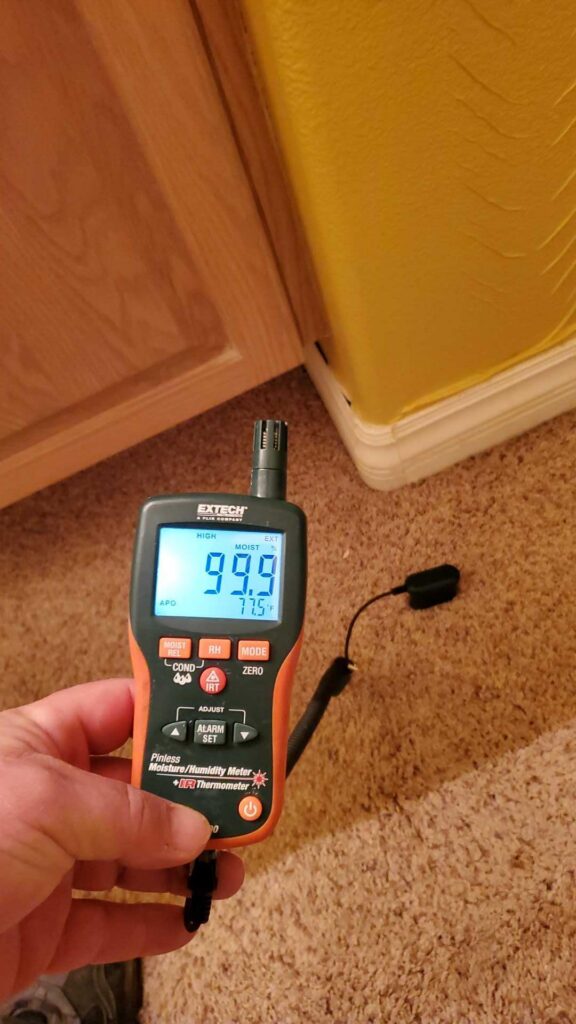
Water travels under flooring, behind baseboards and up into drywall. We use moisture meters and inspection tools to map how far it has spread, including areas that look dry.
Water extraction
Standing water is removed from floors, carpet and pad using extraction equipment. Removing as much liquid water as possible makes the drying phase more effective. More on water extraction.
Evaluating affected materials
Some materials can be dried in place. Others hold too much water, are too damaged or were exposed to contaminated water and need to come out.
Controlled demolition when necessary
Where needed, we remove wet drywall, baseboards, insulation, carpet pad or other unsalvageable materials in a controlled way so hidden cavities can dry.
Equipment placement
Air movers and dehumidifiers are placed based on the size of the affected area and the materials involved, to create good drying conditions.
Structural drying & dehumidification
Air movement pulls moisture out of wet surfaces, and dehumidifiers remove that moisture from the air so it doesn't settle back into the building. About structural drying.
Moisture monitoring
We return to take readings in the affected materials, compare them against unaffected areas and adjust equipment as the structure dries.
Completion of the dry-out
Equipment is removed when readings show the affected materials have dried. How long that takes depends on the materials, how much water was involved and how long it sat.
Drying documentation
You receive a record of the mitigation work, including photos, moisture readings and drying records, to share with your insurance company or repair contractor. How documentation helps with insurance.
Why "surface dry" isn't the same as dry
Las Vegas air is dry, so carpet and wall surfaces can feel dry within a day or two. That's misleading. Water that has wicked into drywall, soaked into the bottom plate of a wall or settled under flooring and cabinets can stay wet long after the surface looks fine.
Trapped moisture can keep damaging materials, cause odors and create conditions for mold growth. That's why we measure moisture instead of relying on how things look or feel, and why drying is finished when the readings say so.
Clean water, gray water and black water
Water losses are commonly grouped by where the water came from, because the source affects what can be saved:
- Clean water: for example a broken supply line or a leaking water heater. More materials can often be dried in place, especially when work starts quickly.
- Gray water: for example a washing machine or dishwasher discharge. Some porous materials may need to be removed.
- Black water: for example sewage backups or outside flood water. Porous materials that it touches are generally removed. See sewage cleanup and flood cleanup.
Water that starts clean doesn't always stay that way, so we evaluate each loss on site.
Mitigation & dry-out questions
How long does it take to dry out water damage?
It depends on the materials involved, how much water there was, how long it sat and the conditions in the building. We monitor moisture during drying and remove equipment when the readings show the materials are dry, rather than working to a fixed number of days.
Will you have to remove drywall or flooring?
Not always. Some materials can be dried in place. When materials are too saturated, damaged or contaminated, or when a wall cavity can't dry any other way, we remove only what's needed for proper drying.
Do you do the repairs after drying?
No. We specialize in mitigation and dry-out and don't perform reconstruction or build-back. Once the structure is dry, you're free to choose any contractor for repairs, and our documentation shows what was removed and dried.
Do you handle commercial properties?
Yes. We provide mitigation for offices, retail spaces, multi-unit buildings and HOA communities. See commercial water damage.
Related services
Need water damage mitigation now?
24/7 emergency water damage service across the Las Vegas Valley.